
Prior to my visit to Cleveland Clinic, Main Campus, Cleveland, for a guided tour by Katy Koran, Fine Art Collections Manager, I visited The Cleveland Museum of Art.
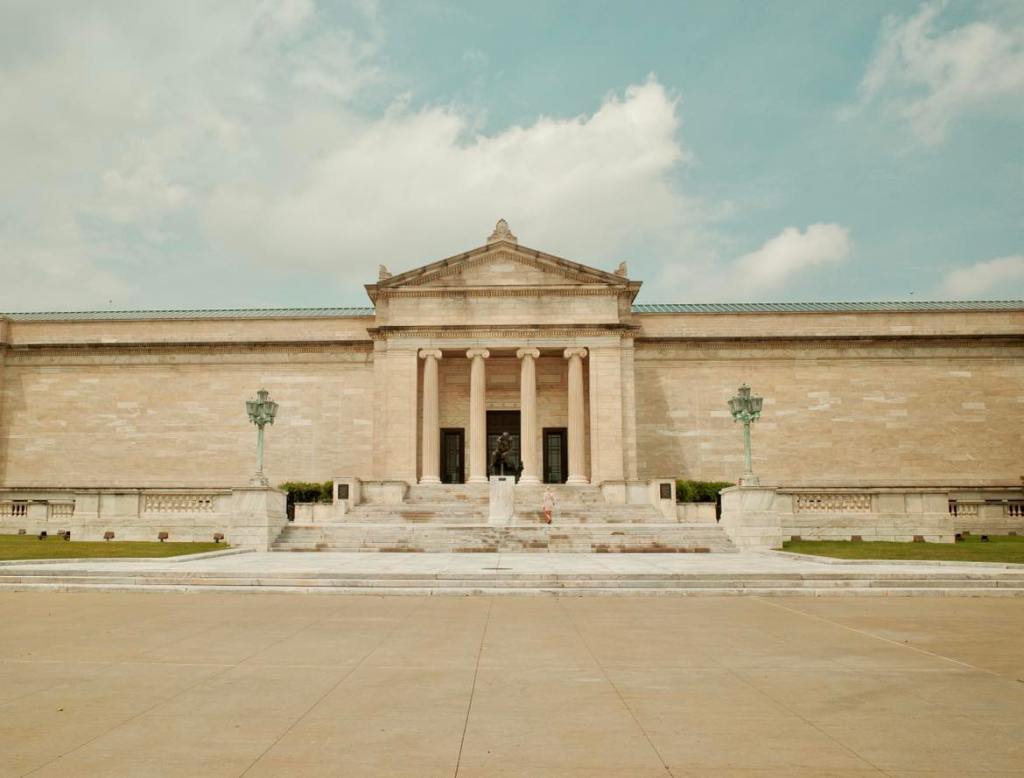
As I was viewing the art, I noticed that it felt somewhat like walking through a hospital. There was a high proportion of people visiting the museum with bandages, eye patches, walking aids etc. and many with carers.
I then spotted that the Cleveland Clinic Shuttle Bus (the bus that travels between the hospitals and hotels on the Main Campus) was dropping people off at the Museum of Art, it is one of their designated stops!
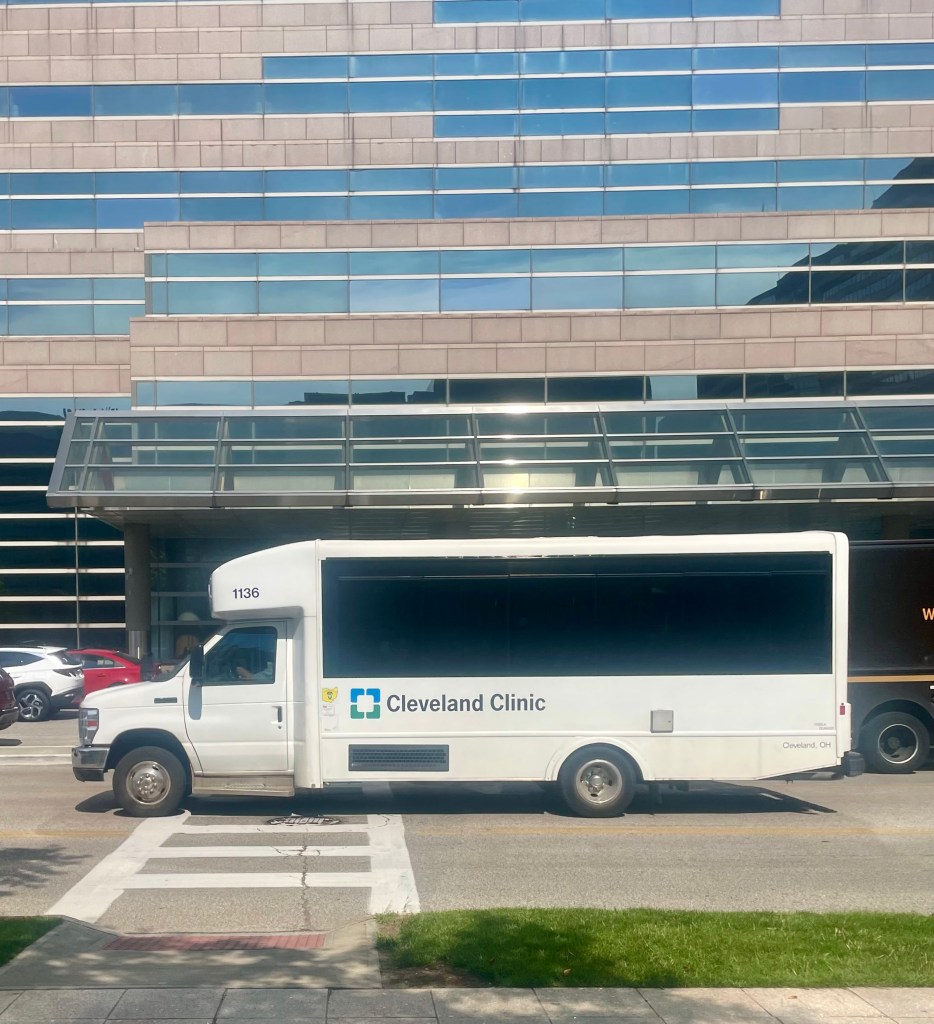
I loved this! – patients and their carers taking the opportunity to view Art.
The act of choosing to go to a museum and purposely view art when you are dealing with health issues, or at the stage of recovery was poignant and fascinating for me.
I was also curious as to if being surrounded by the museum standard artworks at the Cleveland Clinic hospitals has had any influence on the decision to visit the Museum of Art?
Within my fellowship and research, I keep asking the question “do you display art that explores issues around health/illness?” and I am finding that many hospitals/healthcare centres are saying “no we avoid this subject”…
…So I was curious to view the art within the museum that contains a themes or narrative around health and illness.
Here is some of what I found…
Van Gough – The Large Plan Tree (Road Menders at Saint-Remy), 1889
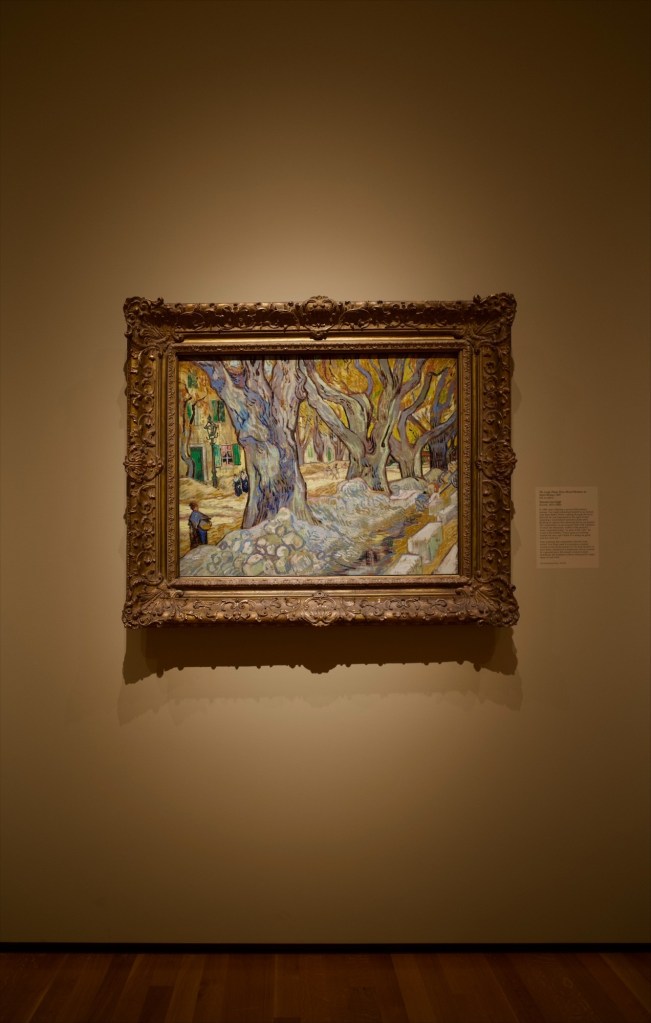
Accompanying information for this artwork:
“In 1889, after suffering a severe hallucinatory seizure, Van Gogh committed himself to an asylum near Saint-Remy. While walking through the town that fall, he was impressed by the sight of men repairing a road beneath immense plane trees. Rushing to capture the yellow leaves, he painted this composition on an unusual cloth with a pattern of small red diamonds, visible in the picture’s many unpainted areas. “In spite of the cold,” he wrote to his brother, “I have gone on working outside till now” and I think it is doing me good and the work too.”
Pablo Picasso – La Vie (Life), 1903
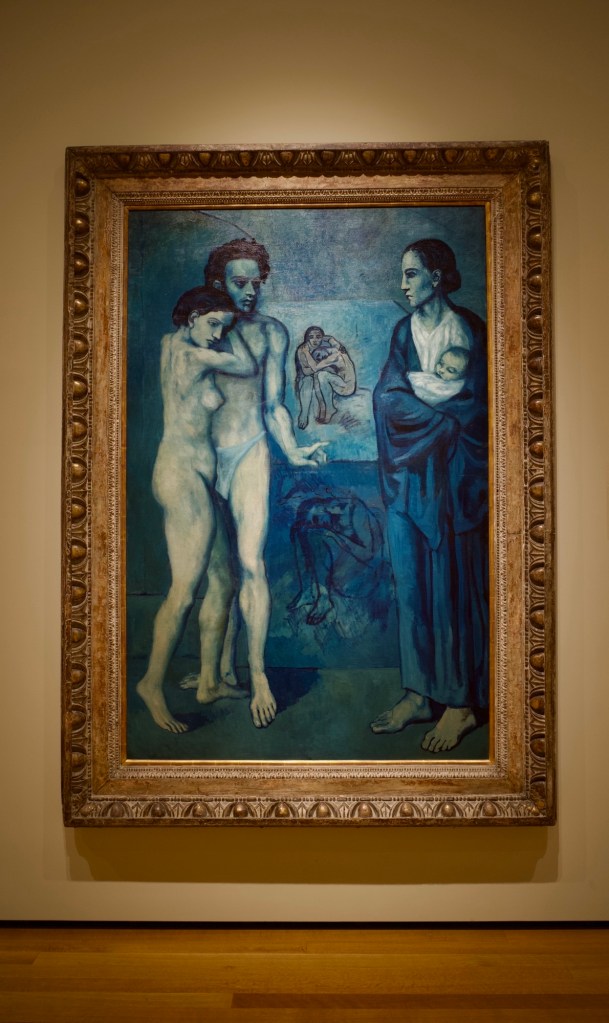
Accompanying information for this artwork:
“In 1901 depressed over the suicide of a close friend, Picasso launched into the melancholic paintings of his Blue Period (1901-4). Only 20 years old and desperately poor, he restricted his palette to cold colours suggestive of night, mystery, dreams, and death. His obsession with the themes of human misery and social alienation reached its climax with this painting. The subject has been interpreted variously as an allegory of scared and profane love, a symbolic representation of the cycle of life, and a working-class couple facing the hazards of real life.”
Art can reflect what it is to be human – events, situations, emotions, fears, and desires. It can provide a sense of connection and reduce isolation through the idea that others are or have experienced similar situations. It can provide hope and provides space for reflection.
Do I feel artworks exploring health should be in hospitals – still pondering, considering how and I may change my mind… but yes I do!
What an incredible and simple partnership between a health system and a cultural institution. Imagine being offered a bus ride to a museum while you recover!
This is a true example of Arts and Health working together.
 Lottie Barnes